
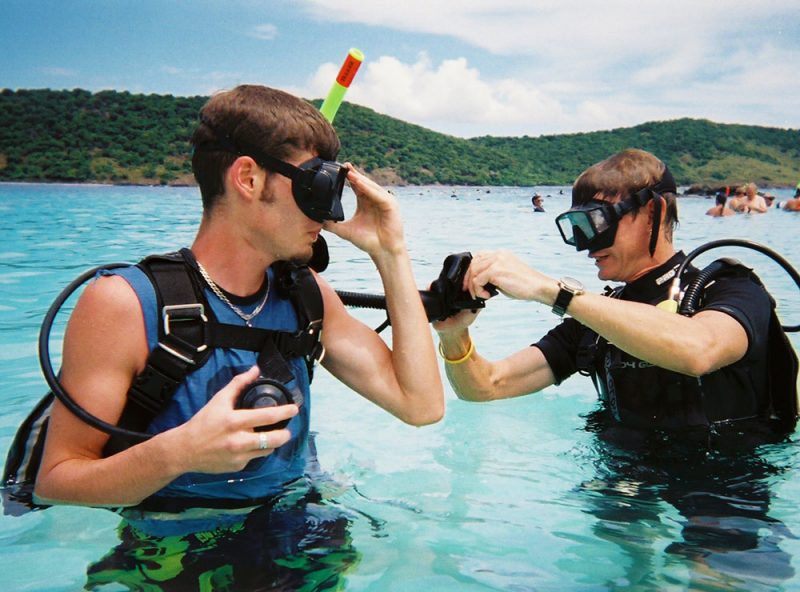

From the very beginning of your dive training, regardless of the organisation or type of diving, you are reminded constantly about the importance of pre-dive safety checks. Confirming that your equipment is configured correctly, streamlined, and of course operating properly is an obvious way to prevent any number of diver problems that can occur both at the surface and underwater.
Many of the incidents I have witnessed as a diver could have been easily prevented by carrying out these simple checks. Although these procedures are taught from day one of an Open Water course, they are an often overlooked basic that can mean the difference between a great dive and a dive that ends badly. If you found yourself doing a space walk from the ISS would you check your space suit or just jump in and hope for the best? Diving is no different.
One disturbing trend that I have noticed is that it tends to be the more experienced divers that have become complacent with these potentially life-saving checks. “Oh, I’ve done hundreds of dives, of course my equipment is set up correctly!“ More often than not it’s this person whose tank valve is closed, or inflator hose isn’t attached properly, or alternate is dangling, smashing around on the reef.I implore you to not be ‘that guy’ – these checks are designed to keep you safe, and keep your buddy safe too!
Newly certified divers are often a bit more vigilant, and are often the people on the boat pointing out equipment issues to far more experienced divers – how embarrassing!!
So, next time you’re gearing up, take your time, and remember the immortal words of rapper Ice Cube – “Check yourself before you wreck yourself!”

Author: Nick Greenop, PADI MSDT


